 ™
™
Summer is the version of Ladakh most travellers know — busy roads, long daylight, cafés full of people and a steady stream of vehicles heading towards Nubra and Pangong.
October feels different.
The crowds begin to thin, temperatures fall, the landscape changes colour and the rhythm of travel becomes quieter. It can be a beautiful time to experience Ladakh — but it asks for a little more preparation and flexibility.
Is October a good time to visit Ladakh?
Yes — for the right traveller.
October works particularly well if you prefer fewer crowds, don't mind colder weather and are comfortable keeping your itinerary flexible.
It may not be the best choice if you want maximum predictability, dislike cold temperatures or need every stop on your itinerary guaranteed.
October isn't necessarily a better time to visit Ladakh.
It is simply a different way to experience it.
Ladakh in October
At a glance
- Weather
- Cold days and much colder nights
- Crowds
- Considerably fewer than peak summer
- Roads
- Condition-dependent
- Best for
- Quieter, slower journeys
- Packing
- Proper warm layers are essential
- Planning
- Keep some flexibility in your route
- Altitude
- Acclimatisation remains essential
What does Ladakh feel like in October?
October is a transition month.
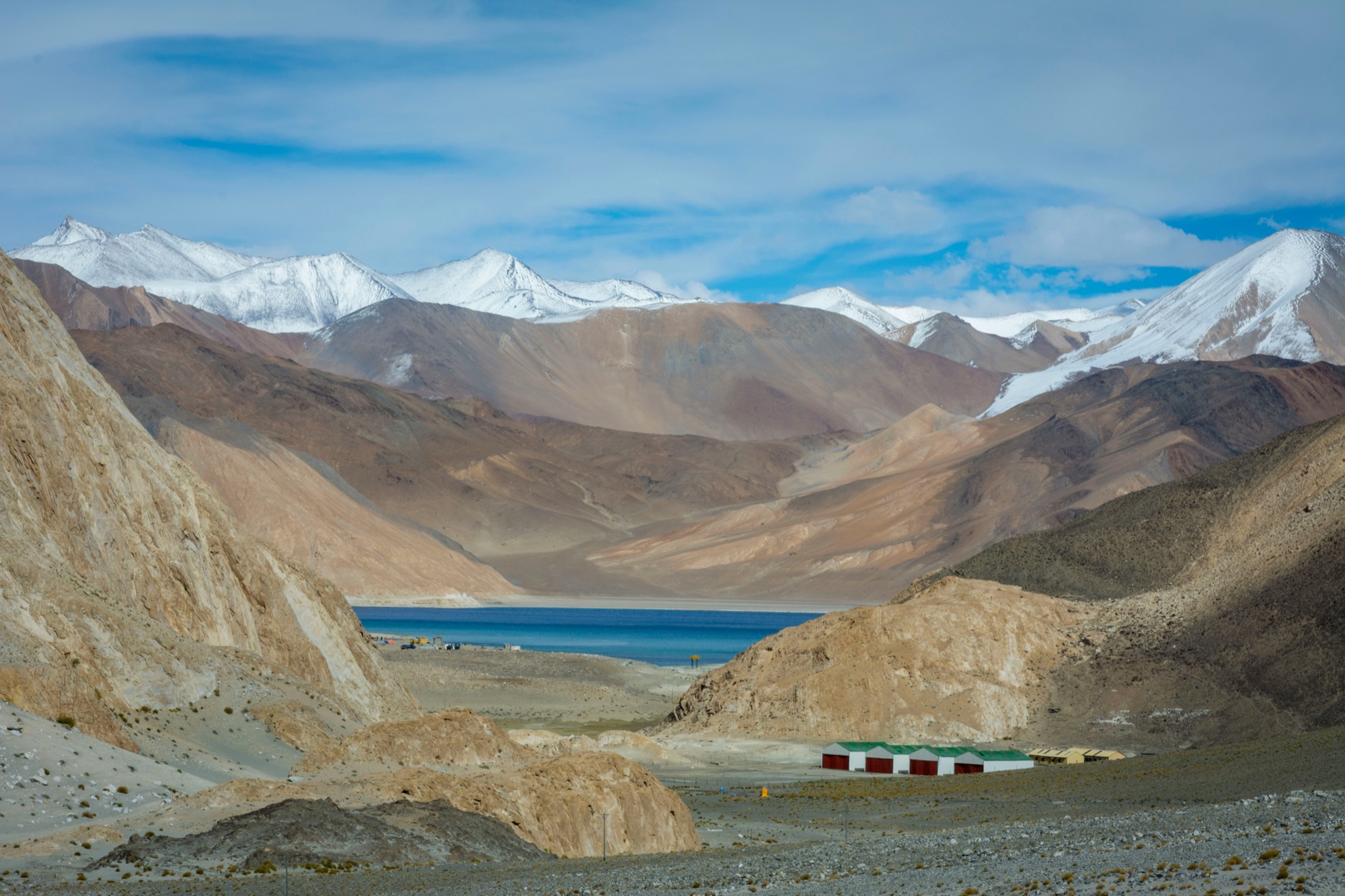
Autumn colours appear around villages and river valleys while the mountains become increasingly stark. Tourist traffic reduces, days become shorter and evenings noticeably colder.
And early October can feel quite different from the end of the month.
That's why we wouldn't plan an October journey exactly the way we'd plan the same route in July or August.
How cold is Ladakh in October?
Expect cold mornings and evenings, with nights potentially dropping below freezing, particularly at higher elevations.
Strong mountain sun can still make daytime surprisingly comfortable, so the easiest way to dress is in layers.
Carry thermals, a fleece or warm mid-layer, an insulated jacket, gloves, a warm cap, good socks and comfortable closed shoes. Sunscreen, sunglasses, lip balm and a reusable water bottle are useful too.
The simple rule: prepare for winter, even when the afternoon doesn't feel like it.
What about altitude?
October may be quieter, but Ladakh is still Ladakh.
Leh sits at roughly 3,500 metres, while places such as Pangong and Hanle take you considerably higher.
Allow at least 48 hours in Leh to acclimatise before travelling higher. Rest, hydrate and keep the beginning of the journey intentionally slow.
Those first two days aren't time lost. They're part of travelling Ladakh well.
What about the roads?
October requires more flexibility than peak summer.
Weather and snowfall can affect high mountain routes, and conditions can change quickly. A road that normally operates during October isn't a guarantee that it will be accessible on the exact day you travel.
Rather than trying to force a fixed itinerary, build a good route and allow it to adapt to the conditions.
Always check current local weather and road advisories close to your travel dates.
Leh, Nubra, Pangong & Hanle in October
Leh is where the journey should begin. Give yourself time here to acclimatise before heading higher. With fewer visitors around, the town itself also begins to feel slower.
Nubra Valley brings a different landscape altogether. Villages and river valleys soften the otherwise dramatic terrain, and autumn can bring beautiful colour to parts of the valley.
Pangong remains extraordinary, but October makes the experience considerably colder and more exposed. Seasonal accommodation and services can reduce as the month progresses, so these should be confirmed before travelling.
Hanle is particularly special for travellers drawn to remoteness and night skies. Its location in Changthang and exceptionally dark skies make it one of Ladakh's most interesting places for stargazing — although clear skies, of course, can never be guaranteed.
The important thing isn't to fit all four into the shortest possible itinerary.
It is to decide which ones make sense for your dates, the conditions and your pace.
Early October vs late October
This is probably the most important distinction when planning.
October 3 and October 28 should not be treated as the same travel window.
As the month progresses, temperatures generally fall and seasonal tourism services can become more limited. The later you travel, the more flexibility you should build into accommodation, routes and daily plans.
October gradually moves Ladakh towards winter.
Your itinerary should acknowledge that.
Is an October Ladakh journey for you?
October might suit you if you enjoy quieter places, don't mind cold weather, prefer landscapes and experiences over busy tourist towns, and are comfortable changing plans when mountain conditions require it.
You may prefer another season if you want the widest choice of accommodation and cafés, dislike cold temperatures, want maximum road predictability or have very little room in your schedule for changes.
Neither is the “right” way to see Ladakh.
It's about choosing the version of Ladakh that suits you.
Travelling Ladakh as the season changes
At Marga, we don't see an October journey as a summer itinerary with different dates.
The season changes how the journey should be designed — from acclimatisation and driving time to accommodation and route flexibility.
Sometimes that also means choosing one less place and experiencing the journey better.
Our Ladakh: Into Winter journeys are built around this changing season, with routes adapted to conditions closer to departure.
Final note: Conditions in high-altitude Ladakh can change quickly. Check current weather, road advisories, accommodation and transport arrangements close to your travel dates rather than relying solely on seasonal information published in advance.
Explore our Ladakh destination guide and current journeys.